Notary Education / Senior Notary Services
When a Notary Appointment Requires Extra Care: Helping Elderly Signers Overcome Language, Identification, and Signature Challenges
By Michael Brown, Commissioned Florida Notary Public | Serving Boca Raton, Delray Beach & Boynton Beach, Florida

Not every notarization is as simple as presenting a driver's license, signing a document, and receiving a notary's seal.
Sometimes, the circumstances are far more complicated. And when elderly individuals are involved, those complications often require additional preparation, patience, and a thorough understanding of Florida notary law.
I recently began preparing for an upcoming mobile notary appointment that illustrates this point. The appointment involves an elderly woman facing three significant challenges:
- She does not speak or understand English.
- She cannot write her name and must sign using a mark.
- She does not possess an acceptable form of identification.
An interpreter is expected to be present to assist with communication.
For someone unfamiliar with Florida notary law, these circumstances might suggest that notarization is impossible.
Fortunately, Florida law provides procedures that may accommodate each of these challenges. The important thing is knowing how to navigate them correctly.
1. What Happens When a Signer Doesn't Speak English?
South Florida is home to an extraordinarily diverse population. As a mobile notary serving Boca Raton, Delray Beach, and Boynton Beach, I recognize that language barriers can arise when assisting individuals with important documents.
In this particular appointment, the signer speaks a Polynesian language and does not understand English.
Florida Statute § 117.107(6) establishes that a notary may not take an acknowledgment from someone who does not speak or understand English unless the nature and effect of the document have been translated into a language that person understands.
This makes effective communication essential.
An interpreter may help the signer understand the document and communicate with the notary. However, an interpreter's presence alone does not automatically make a notarization appropriate. The notary must still be reasonably satisfied that the signer understands the transaction, is acting voluntarily, and can meaningfully participate in the required notarial act.
The goal isn't simply to obtain a signature. It's to ensure that the person signing understands what they are being asked to do.
2. What If an Elderly Person Cannot Sign Their Name?
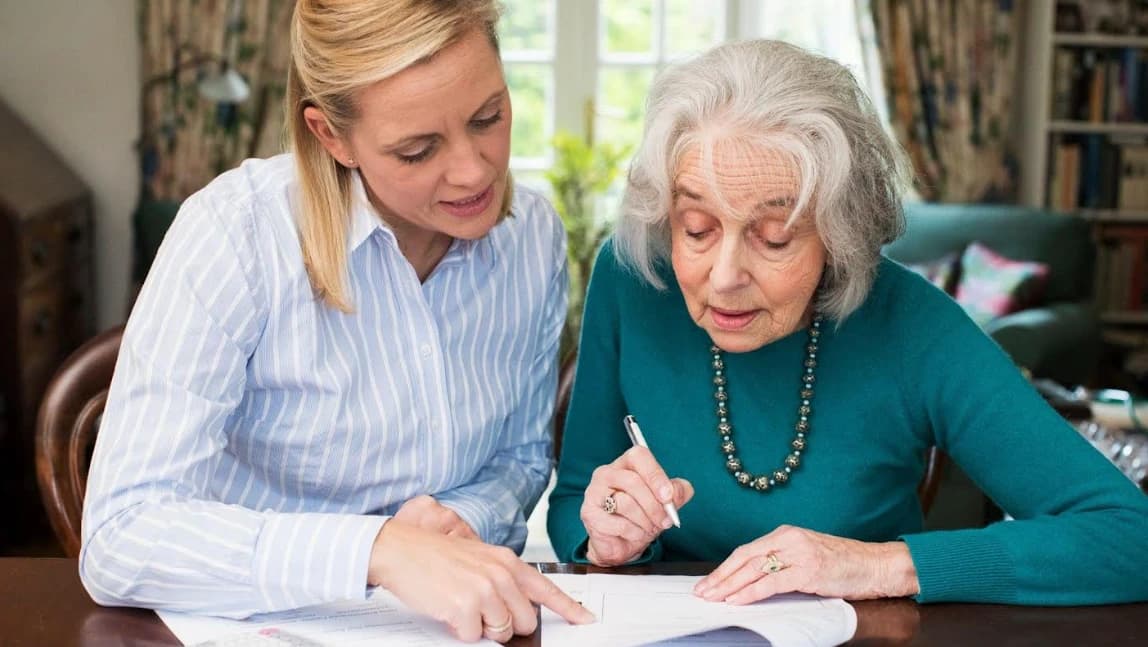
This situation is more common than many people realize.
Advanced age, arthritis, neurological conditions, physical disabilities, and other limitations can make handwriting extremely difficult or impossible.
But an inability to write a traditional signature does not necessarily prevent someone from executing a document.
Florida Statute § 117.05(14)(b) specifically authorizes notarization when an individual signs using a mark, provided the applicable requirements are satisfied.
For a signature by mark, Florida requires:
- Two disinterested individuals to witness the signing.
- The notary to print the signer's first and last names in the appropriate positions on the signature line.
- The notary to identify the mark with the required notation.
The signer makes the mark personally, and the notary completes the appropriate notarial certificate.
This procedure can provide an important accommodation for elderly or physically challenged individuals who remain capable of making their own decisions.
There is also a separate procedure under Florida law for qualifying individuals who are physically unable even to make a mark.
Physical limitations do not automatically mean that someone has lost the ability to make informed decisions.
3. Can a Florida Notary Help Someone Who Has No Photo Identification?
This is another important issue, particularly for elderly individuals who no longer drive, have surrendered their driver's licenses, or have difficulty obtaining replacement identification.
Florida generally requires satisfactory evidence of a signer's identity before performing a notarization.
However, under Florida Statute § 117.05(5), credible witnesses may provide an alternative means of identification when the statutory requirements are met.
Depending on the circumstances, the identification procedure may involve:
- One credible witness personally known to the notary, or two credible witnesses whose identities are satisfactorily established.
- The credible witnesses must provide sworn written statements meeting specific legal requirements.
Among other things, they must personally know the signer, establish that the signer is the person named in the document, and satisfy the law's requirements concerning the signer's lack of acceptable identification.
They must also have no financial interest in the underlying transaction and cannot be parties to it.
This alternative can be particularly important when assisting elderly individuals who are homebound or living in senior care facilities.
However, credible witnesses cannot simply substitute for identification because doing so is more convenient. The legal requirements must genuinely be satisfied.
4. Why Understanding and Willingness Are So Important
Of all the responsibilities a notary has when working with elderly individuals, one of the most important is recognizing whether a signer appears to understand the nature and effect of the document.
Florida Statute § 117.107(5) prohibits notarizing a signature when the individual appears mentally incapable of understanding the nature and effect of the document.
This does not mean that being elderly, physically disabled, or unable to communicate in English establishes mental incapacity.
Far from it.
An individual may have significant physical limitations while remaining perfectly capable of understanding and making important decisions.
The notary's responsibility is to evaluate the circumstances of the notarization, communicate appropriately with the signer, and be alert to indications of confusion, coercion, or undue influence.
This is especially important with documents involving financial decisions, property interests, and legal authority.
And while a notary does not make medical diagnoses or provide legal advice, there are circumstances in which declining or postponing a notarization is the appropriate decision.
Sometimes, protecting a signer means recognizing when not to proceed.
5. Why Preparation Matters Before the Appointment
One of the advantages of working with an experienced mobile notary is the ability to anticipate potential complications before arriving at the appointment.
When a signer has special needs, preparation may include:
- Understanding the type of document requiring notarization.
- Determining whether additional document witnesses are needed.
- Confirming that an appropriate interpreter will be available.
- Preparing for a legally compliant signature by mark.
- Establishing whether credible witnesses can satisfy Florida's identification requirements.
- Allowing adequate time for communication and questions.
Some legal documents, such as deeds, powers of attorney, and estate planning instruments, may have additional execution requirements beyond notarization. Those requirements should be addressed with the document preparer or an appropriate legal professional before the signing.
The objective is to avoid unnecessary stress, confusion, and delays while maintaining full compliance with Florida law.
6. Mobile Notary Services for Seniors in Boca Raton, Delray Beach, and Boynton Beach
For many elderly residents, traveling to a bank, shipping center, or notary office is difficult. For others, it may be physically impossible.
That's why mobile notary services can play such an important role in our local communities.
I provide mobile notary services for seniors throughout Boca Raton, Delray Beach, and Boynton Beach, including appointments at:
- Private residences and retirement communities.
- Assisted living facilities and senior living communities.
- Rehabilitation and skilled nursing facilities.
- Hospitals and other healthcare settings.
- Memory care facilities, when the signer can satisfy the applicable legal requirements.
Familiarity with these communities and facilities allows me to coordinate appointments efficiently, particularly when family members, caregivers, witnesses, or interpreters must be present.
But beyond convenience, what matters most is treating every signer with patience, dignity, and respect.
An elderly person should never feel rushed through an important document simply because communication or physical limitations make the process more complicated.
7. Notarization Is About More Than a Signature and Seal
My upcoming appointment serves as a reminder of something I have come to appreciate through my work as a mobile notary:
The value of a knowledgeable notary is often most apparent when the circumstances are anything but routine.
A language barrier, an inability to sign traditionally, or the absence of acceptable identification can create genuine obstacles.
But those obstacles do not always make notarization impossible.
Florida law provides procedures designed to accommodate certain special circumstances while preserving the integrity of the notarial process.
The key is understanding the law, preparing properly, and recognizing that every signer deserves to be treated as an individual.
For me, that's what professional mobile notary service is all about.
Need a Mobile Notary for an Elderly Family Member?
If you have a loved one in Boca Raton, Delray Beach, or Boynton Beach who needs a document notarized but faces mobility limitations, identification challenges, or other special circumstances, I'm happy to discuss the situation before scheduling an appointment.
Advance planning can often make a significant difference.
Michael Brown Mobile Notary
Professional Mobile Notary Services
Serving Boca Raton, Delray Beach, and Boynton Beach, Florida.
Educational disclaimer: This article provides general information about Florida notary procedures and is not legal advice. The ability to complete any notarization depends on the specific circumstances, applicable law, and document requirements.
Florida legal references
- Florida Statute § 117.05 — Identification requirements and signatures by mark.
- Florida Statute § 117.107 — Language barriers, understanding, and prohibited notarial acts.
Ready to schedule your mobile notary appointment?
I come to you — homes, hospitals, assisted living and memory care communities, law offices, and more across Palm Beach County.